Zoe E. Zimmerman1, Kyra Chism², Forough Heidarzad Pahlaviani3, Saumya Srivastava3,A ida Rodriguez Murillo3, Norhan B. B. Mohammed3, Mohammad-Javad Khosousi3, Leah S. Puklin10, Mario Strazzabosco4, Ariel Jaffe3, Raghav Sundar5, 6, Melissa Perrotti11, Julius Chapiro3,7,8, Wajahat Mehal3,9, Jacquelyne J. Gaddy5, Melinda L. Irwin6,10, Tamar H. Taddei3,9, Leah M. Ferrucci6,10#, Bubu A. Banini3*#
1Yale School of Medicine, New Haven, CT, USA
2Morehouse School of Medicine, Atlanta, GA, USA
3Section of Digestive Diseases, Department of Internal Medicine, Yale School of Medicine, New Haven, CT, USA
4Yale Liver Center, Department of Internal Medicine, Yale School of Medicine, New Haven, CT, USA
5Section of Medical Oncology, Department of Internal Medicine, Yale School of Medicine, New Haven, CT, USA 6Yale Cancer Center, New Haven, CT, USA
6Yale Cancer Center, New Haven, CT, USA
7Section of Interventional Radiology, Department of Radiology and Biomedical Imaging, Yale School of Medicine, New Haven, CT, USA
8Department of Biomedical Engineering, Yale School of Engineering & Applied Science, New Haven, CT, USA
9VA Connecticut Health Care System, West Haven, CT, USA
10Department of Chronic Disease Epidemiology, Yale School of Public Health, New Haven, CT, USA
11Liver Cancer Program, Smilow Cancer Hospital, CT, USA
#co-senior authors contributed equally to the project
*Corresponding author: Bubu A. Banini, Yale University School of Medicine, Department of Medicine, Section of Digestive Diseases, New Haven, CT 06510, USA.
Received Date: 16 September, 2026
Accepted Date: 22 September, 2026
Published Date: 25 September, 2026
Citation: Zimmerman ZE, Chism K, Pahlaviani FH, Srivastava S, Murillo AR, et al. (2026) Patient Experiences with Hepatocellular Carcinoma Care: A Qualitative Study. J Oncol Res Ther 11: 10358. DOI: 10.29011/2574-710X.10358
Abstract
Background: Hepatocellular carcinoma (HCC) is the sixth most common cancer and the third most common cause of cancer-related death worldwide. Significant differences exist in HCC incidence, treatment, and mortality, with socioeconomic and demographic factors impacting disease burden and clinical outcomes.
Purpose: To explore the experiences of patients with HCC attending a tertiary care center and identify barriers to and facilitators of high-quality, patient-centered care.
Methods: We conducted a qualitative study involving semi-structured interviews of patients with HCC. Participants were recruited from HCC-specific and general gastrointestinal (GI) oncology clinics across a tertiary care cancer center network from July 2025 to April 2026. Interviews were recorded and transcribed, and we analyzed the data using inductive thematic analysis informed by grounded theory methods.
Results: We interviewed 22 patients with HCC and identified 6 major themes regarding HCC care: 1) HCC diagnosis profoundly altered patients’ lives; 2) communication quality shaped care experiences; 3) patients had different preferences for involvement in medical decision-making; 4) clinical limitations and patient perspectives shaped treatment decisions; 5) social support systems helped patients navigate illness and care; and 6) access to care was generally adequate, but barriers remain.
Conclusions: This study highlights the multidimensional burden of HCC and the complex interplay of clinical, psychological, social, and structural factors that shape care experiences. Opportunities to improve patient-centered HCC care include involvement of nurse navigators and family members where appropriate, transparency and timeliness in conversations regarding diagnosis and treatment options, and early assessment of patient preferences for involvement so that care can be tailored to the individual.
Keywords: Hepatocellular Carcinoma; Patient Experiences; Access To Care; Shared Decision-Making; Communication, Oncology.
Introduction
Liver cancer is the sixth most common cancer and the third most common cause of cancer-related death worldwide [1]. Hepatocellular carcinoma (HCC) is the most common primary liver malignancy and is a major public health challenge in the United States [2]. Despite advances in surveillance, diagnosis, and treatment, liver cancer continues to be associated with substantial morbidity and mortality, with an overall 5-year survival rate of approximately 18% for HCC in one study (2003-2021) [3] and 22% for liver and intrahepatic bile duct cancer combined according to the most recent Surveillance, Epidemiology, and End Results Program (SEER) data [4]. With improved global vaccination efforts and effective oral therapies, recent years have seen a reduction in the HCC mortality rate due to chronic hepatitis B and hepatitis C infections [5]. However, growing rates of metabolic syndrome in the United States have led to an increase in metabolic dysfunction-associated steatotic liver disease (MASLD), and the age-standardized mortality rate of HCC due to MASLD and alcohol associated liver disease increased from 2006-2022 [5]. Despite expanding therapeutic options, significant disparities persist in HCC incidence, treatment utilization, and mortality amongst different demographic and socioeconomic groups [6-8].
The factors contributing to these disparities are complex and incompletely understood. Existing evidence suggests that differences in outcomes may arise from barriers encountered throughout the continuum of care, including delays in diagnosis, limited access to specialty services, variations in treatments received, and structural inequalities within healthcare systems [9]. Additionally, previous research indicates that patients with HCC may experience challenges related to health literacy, medical mistrust, provider-patient communication, healthcare access, financial burden, transportation, and other social drivers of health, all of which may influence engagement with care and treatment outcomes [10]. These factors may disproportionately affect racial and ethnic minority populations and individuals of lower socioeconomic status, who are more likely to experience delayed diagnosis and reduced access to curative therapies and specialized centers where treatment is offered, contributing to poorer clinical outcomes [11].
Existing qualitative work has examined discrete dimensions of the HCC patient experience, including barriers to care and treatment goals, but comprehensive accounts from patients receiving care within US tertiary cancer networks remain limited [12-14]. Specifically, Ray et al. examined HCC care experiences in North Carolina among patients within six months of diagnosis, with half of their sample treated at a public hospital; our study adds to this work by also capturing perspectives across the disease trajectory, from new diagnosis to remission and recurrence, and within a private, tertiary healthcare center [15]. Understanding patient perspectives is critical for identifying barriers to and facilitators of adequate healthcare delivery. This study sought to explore and characterize the experiences of patients with HCC and to identify patient-reported barriers and facilitators to receiving equitable, high-quality care. Insights gained from patient perspectives can be used to inform the development of targeted interventions and healthcare delivery strategies aimed at improving care quality and reducing disparities in HCC outcomes.
Methods
Participants and Recruitment
We recruited participants from both HCC-specific and general GI oncology clinics across a tertiary care cancer center network. Participants had established clinical care with five providers, including one GI oncology physician, two hepatology physicians, one hepatology Advanced Practice Registered Nurse, and one interventional radiologist. Participants were selected using convenience sampling when the recruiting research coordinator was available and when multiple potentially eligible patients were scheduled in close succession. Patients were eligible for the study if they were English-speaking, ≥18 years old, and had a diagnosis of HCC. The clinician introduced the study during the patient’s appointment, and, if interested, the research coordinator would discuss further with the patient and obtain verbal consent. Recruitment continued until thematic saturation was reached. The study was reviewed by the institutional review board and deemed exempt. Verbal consent was obtained from patients prior to proceeding with the study interview.
Data Collection
Semi-structured interviews were conducted with participants lasting approximately 20 minutes to 1 hour either by videoconference or over the phone. Several participants interacted with a family member during the interview, as participants were often at home during these conversations, and family members contributed meaningful information to clarify certain aspects of their care. The interviewer did not have an established relationship with any of the participants prior to study commencement. Demographic information was collected and managed using REDCap electronic data capture [16, 17].
The interview guide is shown in Supplementary Table 1.
Participants were asked questions about their life prior to HCC diagnosis, such as their day-to-day activities including employment and responsibilities at home; their experience with diagnosis and treatment including the medical care they received and interactions with providers; barriers to care; and any concerns or needs related to future care. Interviews were audio recorded, transcribed verbatim, and verified and de-identified by a study team member prior to analysis. No repeat interviews were conducted. Field notes were not taken during these interviews, and transcripts and findings were not provided to participants for feedback.
|
Characteristic (N = 22) |
n |
% |
|
Gender identity |
||
|
Male |
19 |
86.4 |
|
Female |
3 |
13.6 |
|
Race |
||
|
White |
13 |
59.1 |
|
Black or African American |
8 |
36.4 |
|
Prefer not to answer |
1 |
4.5 |
|
Ethnicity |
||
|
Hispanic |
1 |
4.5 |
|
Non-Hispanic |
21 |
95.5 |
|
Insurance |
||
|
Employer-based only |
2 |
9.1 |
|
Medicare only |
7 |
31.8 |
|
Medicaid only |
3 |
13.6 |
|
Private and public |
8 |
36.4 |
|
More than one public |
1 |
4.5 |
|
No insurance |
1 |
4.5 |
|
Approximate annual income |
||
|
< $20,000 |
9 |
40.9 |
|
$20,000–$34,999 |
1 |
4.5 |
|
$35,000–$49,999 |
1 |
4.5 |
|
$50,000–$74,999 |
1 |
4.5 |
|
$75,000–$100,000 |
4 |
18.2 |
|
> $100,000 |
6 |
27.3 |
Table 1: Sociodemographic characteristics of study participants.
Analysis
We analyzed data using inductive thematic analysis informed by grounded theory methods. Three investigators (ZZ, FHP, KC) independently reviewed transcripts and applied codes, words or phrases relating to the research question “what factors impact the care received by patients with HCC?” to a subset of transcripts. These investigators then met to reach consensus of the coding scheme with input from the two principal investigators (BB and LF). The codebook (Supplemental Table 2) was then iteratively refined as additional transcripts were reviewed. The remaining transcripts were coded using Dedoose software. Interviews were conducted until saturation was reached, meaning no new codes or concepts were abstracted from interviews as determined by the study team. Three investigators (ZZ, FHP, KC) met to discuss themes related to the research question, group codes into themes, and add relevant supporting participant quotations. The final thematic scheme and thematic map were agreed upon by all co-authors. The consolidated criteria for reporting qualitative research (COREQ) was used to guide reporting of study methods and results (Supplemental Table 3).
Results
Participant Demographic Characteristics
Among 30 potential participants, 28 were approached by the research coordinator, and 27 expressed initial interest in the study. Ultimately, 22 participants scheduled and subsequently participated in interviews. Participants were predominantly male (n=19, 86%) and non-Hispanic/Latino (n=21, 95%); 59% (n=13) identified as White and 36% (n=8) identified as Black (Table 1). Insurance coverage types included employer-based (n=2, 9%), Medicare only (n=7, 32%), Medicaid only (n=3, 13%), private and public (n=8, 36%), more than one public (n=1, 5%), and no insurance (n=1, 5%). Income distribution for <$20,000, $20,000$34,999, $35,000-$49,999, $50,000-$74,999, $75,000-$100,000, and >$100,000 were 41% (n=9), 5% (n=1), 5% (n=1), 5% (n=1), 18% (n=4), and 27% (n=6) of the cohort, respectively.
Themes
Six themes were identified from the data, as detailed below and in Table 2. Relationships between themes are illustrated in Figure 1.
|
Theme |
Representative quote |
|
HCC diagnosis profoundly altered patients’ lives |
“I think the hardest challenge was probably accepting the fact that this is what's happening… It's not business as usual with me. It's, I got issues here that need to be dealt with through medical procedures. And, and also… it mentally puts you aside a little bit… Takes you off the highway and kind of put you on the sidewalk to say, ‘Oh, let me think… things in life changed a little bit here… This… is an issue that, uh, that's life threatening.' Uh, and, um, kinda readjust about how you, how you focus yourself, on a daily basis.” – ID 18 |
|
Communication quality shaped care experiences |
“Dr. [name] really, uh, brought in a overview and a, a deep understanding of the topic. It became quickly aware that she's a, uh, a specialist that is, has incredible depth, uh, brilliance in what I'll call, on the topic, uh, remembers and is able to connect many different facets of a case, uh, and present it in a way that's understandable to the patient. And that's critical.” – ID 8 |
|
“So she offered to leave her clinic and come out to North Haven to meet with me and sit with me and with me and any other family members that wanted to, and just explain everything and talk about, which she did. And it was really, it was really nice of her to do that.” – ID 9 |
|
|
“Well, when [provider name] got the diagnosis back that there was a … 24 millimeter nodule with a pseudo capsule formation on the upper right lobe, he didn't have the wherewithal to tell me that I had cancer. I had to read the report myself… But what else was he withholding from me…” – ID 2 |
|
|
Patients had differing preferences for involvement in medical decision-making |
“It's not. I feel it's not up to me to make that decision. Doctor knows what's better for me.” – ID 1 |
|
“Uh, it was, so it was really between the two hospitals of making the decision. We decided on [hospital name]. Uh, it was almost like an interview the first time we met there, uh, at that time. And we decided to go full on the treatment of the cirrhosis.” – ID 8 |
|
|
Clinical limitations and patient perspectives shaped treatment decisions |
“Actually, there is no treatment options really except the surgery. And that was it. There was no change in diet or anything that I remember.” – ID 14 |
|
“But before they can start really getting into chemo, um, [I] made it clear that chemo was off the table. No, I'm not doing it. I seen that. I seen the results of it, I've seen side effects of it.” – ID 26 |
|
|
Social support systems helped patients navigate illness and care |
"Well, I had my family. My family was great… Like I said, my son's in [location], so the oldest one came up the day of the surgery. And then my youngest son came up to take care of me after I got home from the hospital." – ID 19 |
|
“I had, um, you know, I had friends stay with me 'cause I would stay with me, um, overnight for that procedure and the next day just to make sure that I wasn't gonna have any, um, reaction to it.” – ID 22 |
|
|
Access to care was generally adequate, but barriers remain |
“It hasn't affected my personal finances at all… Um, because I don't pay for anything. Okay. My insurance pays for everything, and I have, uh, Medicaid, which picks up the rest if something's missing…” – ID 4 |
|
“…I had these follow-up scans that I just couldn't afford.” – ID 15 |
Table 2: Themes and representative quotes.
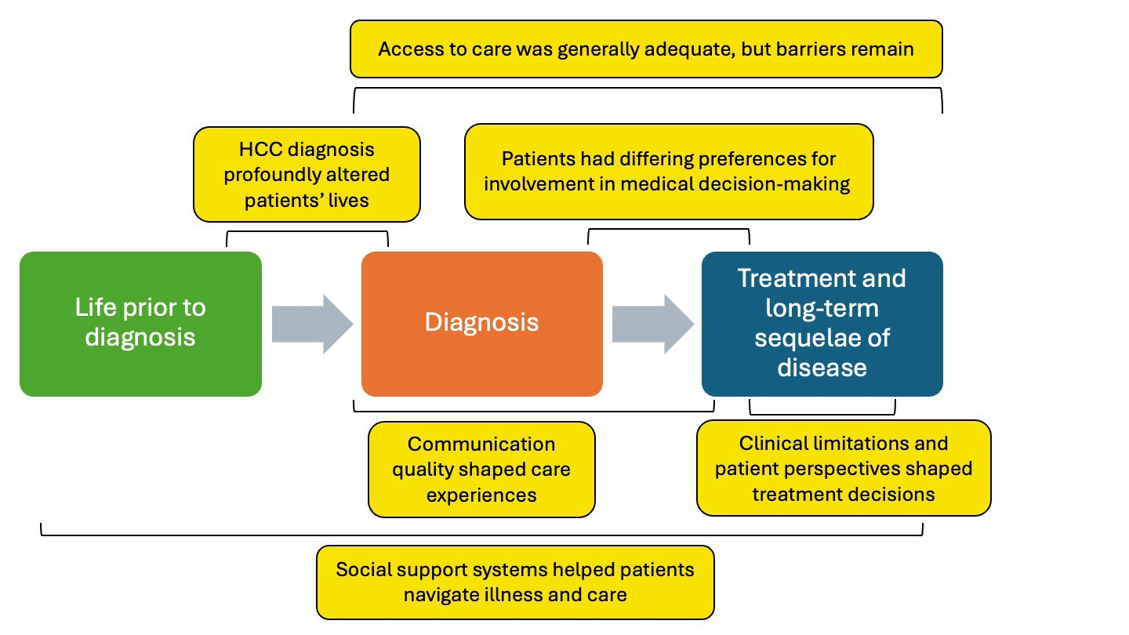
Figure 1: Thematic map demonstrating the relationship between themes (yellow boxes) and their role along the care continuum from life prior to diagnosis to treatment and long-term sequelae of disease.
1. HCC diagnosis profoundly altered patients’ lives
Diagnosis of HCC impacts multiple facets of life, including social life, family, work, and hobbies. Patients may lose independence and often dramatically increase the frequency with which they interact with healthcare providers and the hospital system.
“Just like now, it’s 40 d*** appointments. If I get two, three days rest, I got to go to another doctor.” (ID26)
When initially diagnosed with HCC, patients commonly described feeling shocked and afraid.
“I just stared at the doctor, and I couldn’t believe it. And it wasn’t until I got home that I started crying you know because it just sounded real to me.” (ID25)
The disease takes its toll – both physically and mentally – with many patients describing pain, fatigue, and weight loss, which, in tandem with changes in lifestyle, could lead to changes in how patients perceived themselves.
“That’s my issue now, just trying to put more weight on. Um, because... the person that... I feel is not the person I see in the mirror, which is interesting.” (ID28)
However, patients use optimism to cope with their diagnosis, expressing that they have gained a new perspective on and appreciation for life after being diagnosed with HCC.
“So I try, try to keep a positive attitude and take, you know, one step at a time, day by day.” (ID23)
2. Communication quality shaped care experiences
Patients had varied feelings about the adequacy of communication with providers. Some felt very fondly toward and had positive experiences with their providers, describing that information regarding diagnosis and treatment was sufficiently conveyed, and all questions were answered.
“I’m … lucky to have the staff providers that I have. I find ‘em all to be good communicators, knowledgeable.” (ID18)
Others had less positive experiences, stating that their diagnoses were communicated without empathy and with inadequate information about treatment options.
“I’ve been in the dark... I’m not being... informed enough.” (ID3)
Some patients expressed difficulty understanding medical jargon and dealing with the large amount of new information about their condition and treatment options.
“So you’re trying to process data at a very high rate, uh, during an interview or during a session with... medical professionals… sometimes... you just can’t process it all.” (ID8)
Although medical information can be difficult to process, patients generally wanted transparency when it comes to communication – no “sugar-coating” or “beating around the bush.”
“I feel like [if you are] brutally honest with the patient from the beginning... it’ll go a lot smoother and easier for both...” (ID26)
3. Patients had differing preferences for involvement in medical decision-making
On one end of the spectrum, patients preferred to take a more passive role and follow whichever direction the provider thinks is best.
“Whatever they suggested, that’s what I did. It wasn’t that I wanted to see what options were.” (ID14)
On the other end of the spectrum, patients had preferences, sometimes even requesting certain treatments by name based on their own research.
“Then [provider name] suggested an ablative technique, and I said,
‘No, I want Y-90.’ And he said, ‘Okay.’” (ID2)
4. Clinical limitations and patient perspectives shaped treatment decisions
Many patients perceived limited treatment options for HCC.
“It was either get a transplant or don’t get a transplant... so it was very much... abrupt, [there] wasn’t a lot of discussion on options at that time...” (ID8)
Some patients were not candidates for surgery or transplant due to the severity of their disease, comorbidities, or other factors. Some patients were limited only to experimental therapeutics.
“You know, it’s all experimental stuff, double doses-” (ID26).
Some patients also have strong feelings about not wanting to pursue certain treatment options, for instance not wanting to undergo what they perceived to be “chemo” because of side effects they observed in a family member or friend or not wanting to undergo major surgery such as transplantation.
“My older sister... she had... breast cancer... So, she told me, ‘bro... don’t let them put no chemo on you.’ I said, ‘I ain’t’...” (ID10)
5. Social support systems helped patients navigate illness and care
Family and friends provided invaluable support to patients throughout the diagnosis and treatment process. They helped decipher information about the patient’s condition, communicate with providers, and advocate for patients. They also provided dayto-day support and helped patients communicate with providers and navigate medical care.
“My daughter... she now lives with me since I’ve been sick. She like run the house basically while my wife is at work.” (ID28)
“My wife went to every doctor’s appointment with me... and it worked out good because if the doctor said something to me and I didn’t remember…, she would.” (ID18)
Family members could be especially helpful if they had some degree of medical knowledge; one patient described that his wife was able to advocate for him.
“[My wife is] in the medical field, and she was worried about the tumor markers, and she explained to me, ‘you’re not supposed to be that high.’” (ID26)
Another patient described how having social support, whether family or friends, is meaningful.
“It was all about... my wife, my friends.... it was a very small circle of people that, that I would let know, but those people would call me every day...” (ID28)
6. Access to care was generally adequate, but barriers remain
Many patients expressed that insurance coverage and care coordination were adequate. “Medicare really covers almost everything” (ID3)
“My insurance, it covers everything. And I usually have a small copay... $15 whenever I go to a doctor’s appointments. But as far as the cost of the operations, I haven’t had to pay a dime out of pocket” (ID14)
However, some patients were uninsured or underinsured, which led to problems affording care.
“I’m in a position where… I make too much money for, either free or low-cost medical insurance but not enough money to pay for my own, uh, medical insurance….I had these follow-up scans that I just couldn’t afford...” (ID15)
Even among those who could afford care, scheduling and attending appointments could prove challenging.
“[The doctor] apparently was very busy and had a lot of appointments... so sometimes it was difficult to get to see her after, you know, on a timely basis after the results.” (ID22)
Other patients noted delay in follow-up regarding test results and next steps in care, which could be frustrating.
“Okay, so now it’s Thursday. The results have been out since Monday. We still don’t understand what the results are...” (ID8)
Lack of reliable transportation or distance from clinic also represented a barrier to care.
“With transportation, we... rely on other people... to come pick us up. And I mean, the cab company does bail...” (ID4)
“The distance traveled was an issue, you know. And commuting on 95 is always a problem.” (ID2)
Discussion
In this qualitative study, we explored the experiences of patients with hepatocellular carcinoma receiving outpatient care within our tertiary care center cancer network. Participants in our study provided rich insights from various stages of disease, from new diagnosis to remission and recurrence. Overall, HCC diagnosis impacted the emotional, physical, and social well-being of patients. Patients reported differences in experiences with provider communication and in their desired level of involvement in medical decision-making. Even amongst those who described minimal financial challenges, important barriers to care persisted, including transportation challenges and delays in follow-up of test results and/or appointment scheduling. Across the board, social support systems were considered essential in helping patients navigate complex care pathways. Our findings are consistent with previously reported qualitative studies of patients with HCC [1215].
A study of 25 individuals with HCC suggested that patients experience a multidimensional burden relating not only to disease symptomatology but also to emotional well-being and daily functioning [13]. HCC diagnosis can result in a wide array of negative emotions, including anger, regret, anxiety, depression, shock, panic, uncertainty, and feelings of inferiority [14]. Fatigue is especially prevalent among patients with advanced liver disease and cancer, affecting daily function and overall quality of life [18]. Despite these challenges, patients in our study demonstrated optimism and cognitive reframing, aligning with adaptive coping strategies among patients with advanced cancer [19].
Many participants in our study expressed a preference for clear and transparent communication, even when discussing difficult topics such as prognosis and treatment limitations. These findings are in line with prior work demonstrating that patients with cancer prioritize clear, empathetic interaction, whereas exchanges perceived as superficial or lacking emotional support undermined the care experience [19]. Beyond information exchange, effective dialogue also involves fostering relationships where patients feel valued, respected, and supported in their autonomy [20]. This may be particularly important for patients with HCC, who often manage intricate treatment decisions and uncertainty throughout their care journey [21]. While prior literature suggests that oncology patients are often comfortable relying on their healthcare provider’s expertise in guiding treatment decisions [12], the clinical reality of HCC, with few treatment options, invasive interventions, and a poor prognosis, can unsettle patients who are unprepared for the severity of the disease they face.
The varied patient preference in regards to involvement in medical decision-making in our study emphasizes the importance of personalized decision-making. Consistent with conceptual models of physician–patient communication and shared decisionmaking (SDM), decisions are more likely to lead to improved health outcomes when they are based on the best available clinical evidence, aligned with patient values, mutually agreed upon, and actionable [22]. Although SDM should always remain patient-centered, it does not need to be uniformly patient-directed; in some contexts, a more provider-directed approach may be appropriate and effective [23]. In HCC, where clinical complexity and prognostic uncertainty are high, aligning a patient’s level of engagement with their preferences can improve both patient satisfaction and perceived quality of care. Patients’ hesitation toward major surgery or “chemotherapy” sometimes stemmed from observing severe treatment-related side effects in family members. To address this, goals of care should be identified early in the disease trajectory to facilitate SDM and incorporate patients’ personal values into treatment choices [24].
Social support is critical for helping patients navigate the complex journey of HCC diagnosis and treatment. Strong support systems are helpful throughout the cancer journey by providing transportation assistance, attending clinical appointments, offering financial support, promoting medication adherence, and helping with personal or household care, among other benefits [15]. These social networks become even more important during periods such as liver transplantation, when support from loved ones can serve as a buffer against stress and isolation [25]. Consequently, routine assessment of patients’ social support systems during appointments is essential to identify vulnerable individuals who lack these resources and may benefit from targeted supportive oncology services such as support groups or care navigators.
Although access to healthcare was generally adequate for fully insured patients, significant financial and structural barriers to care for HCC persist. Consistent with these observations, previous studies have documented significant disparities in access to liver transplantation related to insurance, with privately insured patients being up to 22 times more likely to undergo transplantation compared to those covered by Medicaid [26]. Notably, underinsured patients who exceed the eligibility threshold for public assistance but cannot afford private insurance premiums may delay or forgo recommended testing or procedures due to unaffordable out-ofpocket costs. Furthermore, systemic healthcare barriers, including prolonged waiting times for diagnostic results, scheduling delays, geographic obstacles such as unreliable transit and long travel distances to specialized liver centers, compound delays in care. Provider-level factors, such as incomplete pre-transplant evaluations and prolonged referral processes can present barriers to definitive HCC interventions [26]. As insurance coverage alone does not guarantee access to high-quality HCC care, interventions beyond expanding insurance coverage such as strengthening care coordination, streamlining referral pathways, and mitigating logistical barriers through targeted strategies such as patient navigation programs and telehealth services should be examined.
Despite the strengths of our study, several limitations are worth noting. The study was limited to patients from specialized GI and liver cancer clinics in one tertiary care center. The sample size was small, predominantly non-Hispanic White, and Englishspeaking, and thus may not be representative of the broader population of patients with HCC. Furthermore, the clinics had access to a dedicated nurse manager who helped patients address potential barriers to care including lack of insurance coverage and transportation to appointments. Established care pathways also standardized aspects of HCC care, potentially reducing variability in care delivery and mitigating barriers that may be more prominent in other clinical settings. Future studies conducted in other institutions or care settings may help identify different patient perspectives and additional barriers to care.
Conclusions
This study provides insights into patient experiences with HCC care at a tertiary cancer center, highlighting the interplay of clinical, psychological, social, and structural factors that shape care experiences, even among patients receiving care at a major academic health center with access to specialized resources. Patients navigated significant emotional and physical challenges following diagnosis, often relying on social support networks and adaptive coping strategies to maintain resilience throughout their care journey. Communication quality and alignment of decisionmaking approaches with individual patient preferences shape patient experiences, underscoring the need for flexible, patientcentered approaches to care. Despite generally adequate insurance coverage, structural and logistical barriers to equitable access to care persisted, particularly relating to underinsured status, geographic and transportation challenges, and timely receipt of care and result communication. These findings have direct implications for clinical practice and health system design for patients with HCC. Routine assessment of patients’ social support systems, identification of logistical barriers, and integration of care navigation and telehealth services may help reduce inequities in access to timely and high-quality HCC care. Communication should be tailored to individual patient needs, and family members and other social support systems should be involved in care where appropriate and permitted by the patient. Findings highlight several areas for future research, including extending this investigation to other care settings and patient populations and engaging various stakeholders to develop and evaluate actionable, multilevel strategies for improving patient-centered HCC care.
Funding: This research was supported in part by a grant from the Yale Cancer Center Disparities Research Award. Z.E. Zimmerman is supported by the Yale School of Medicine Medical Student Research Fellowship, National Institute of Diabetes and Digestive and Kidney Diseases of the National Institutes of Health under award number T35DK104689, and the National Heart, Lung and Blood Institute of the National Institutes of Health Research under Award Number T35HL007649. N. B. B. Mohammed is supported by the National Institute of Diabetes and Digestive and Kidney Diseases of the National Institutes of Health (NIH) under award T32DK007017W. W. Mehal receives support from Grant 5I01BX003259-10 from VA Office of Research and Development. L. Puklin is supported by Yale Cancer Prevention and Control (CPC) Training Program (T32CA250803) (PI: Irwin and Ma). B.A. is supported by research funding from the GI Oncology Seed Grant, K12 Immuno-Oncology Training Program (IOTP) Scholar Award, National Academy of Medicine Fellow In Diagnostic Excellence Award, and NIH R01DK134624.
Competing interests: The authors have no conflicts of interest related to the product under review. Disclosures are as follows: R. Sundar: Advisory Board or Consulting: Astellas, AstraZeneca, BeOne Medicines, GSK, Takeda, BigHat Biosciences; honoraria: Astellas, AstraZeneca, BeOne Medicines, BMS, Daiichi Sankyo, DKSH, Eli Lilly, Ipsen, MSD, Roche, Taiho; patents: Auristone (license pending), Paxman (licensed); research Funding: Amgen, Genentech, MSD, Astellas, AstraZeneca, Daiichi Sankyo, BigHat BioSciences, Gilead; travel: Astellas, Paxman. B.Banini Advisory Board: Novo Nordisk, Boehringer Ingelheim; Research Funding:
Merck.
References
- Bray F, Laversanne M, Sung H, Ferlay J, Siegel RL, et al. (2024) Global cancer statistics 2022: GLOBOCAN estimates of incidence and mortality worldwide for 36 cancers in 185 countries. CA Cancer J Clin 74: 229-263.
- Villanueva A. (2019) Hepatocellular Carcinoma. N Engl J Med 380: 1450-1462.
- Tran S, Zou B, Kam L, Lee KS, Huang DQ, et al. (2023) Updates in Characteristics and Survival Rates of Hepatocellular Carcinoma in a Nationwide Cohort of Real-World US Patients, 2003-2021. J Hepatocell Carcinoma 10: 2147-2158.
- Surveillance Research Program, National Cancer Institute. SEER*Explorer: An interactive website for SEER cancer statistics [Internet]. 2026 Apr 22 [updated 2026 Jun 22; cited 2026 Sep 13]. Available from: https://seer.cancer.gov/statistics-network/explorer/.
- Qiu S, Cai J, Yang Z, He XY, Xing Z, et al. (2024) Trends in Hepatocellular Carcinoma Mortality Rates in the US and Projections Through 2040. JAMA Netw Open 7: e2445525.
- Torre LA, Siegel RL, Ward EM, Jemal A (2016) Global Cancer Incidence and Mortality Rates and Trends--An Update. Cancer Epidemiol Biomarkers Prev 25: 16-27.
- Ajayi F, Jan J, Singal AG, Rich NE (2020) Racial and Sex Disparities in Hepatocellular Carcinoma in the USA. Curr Hepatol Rep19: 462-469.
- Mezzacappa C, Rossi R, Jaffe A, Taddei TH, Strazzabosco M, et al. (2024) Community-Level Factors Associated with Hepatocellular Carcinoma Incidence and Mortality: An Observational Registry Study. Cancer Epidemiol Biomarkers Prev 33: 270-278.
- Guo A, Pomenti S, Wattacheril J (2021) Health Disparities in Screening, Diagnosis, and Treatment of Hepatocellular Carcinoma. Clin Liver Dis (Hoboken) 17: 353-358.
- Schoenberger H, Rich NE, Jones P, Yekkaluri S, Yopp A, et al. (2023) Racial and Ethnic Disparities in Barriers to Care in Patients with Hepatocellular Carcinoma. Clin Gastroenterol Hepatol 21: 1094-1096. e2.
- Wagle NS, Park S, Washburn D, Ohsfeldt RL, Rich NE, et al. (2022) Racial, Ethnic, and Socioeconomic Disparities in Curative Treatment Receipt and Survival in Hepatocellular Carcinoma. Hepatol Commun 6: 1186-1197.
- Wörns MA, Burns D, Paskow M, Makin H, Miller J, et al. (2024) Patient Experience of Hepatocellular Carcinoma and Their Treatment Goals: An International Qualitative Study and Patient Journey Map. Adv Ther 41: 3598-3614.
- Patel N, Maher J, Lie X, Gwaltney C, Barzi A, et al. (2022) Understanding the patient experience in hepatocellular carcinoma: a qualitative patient interview study. Qual Life Res 31: 473-485.
- Fan SY, Eiser C (2012) Illness experience in patients with hepatocellular carcinoma: an interpretative phenomenological analysis study. Eur J Gastroenterol Hepatol 24: 203-8.
- Ray EM, Teal RW, Carda-Auten J, Coffman E, Sanoff HK, et al. (2023) Qualitative evaluation of barriers and facilitators to hepatocellular carcinoma care in North Carolina. PLoS One 18: e0287338.
- Harris PA, Taylor R, Minor BL, Elliott V, Fernandez M, et al. (2019) The REDCap consortium: Building an international community of software platform partners. J Biomed Inform 95: 103208.
- Harris PA, Taylor R, Thielke R, Payne J, Gonzalez N, et al. (2009) Research electronic data capture (REDCap)--a metadata-driven methodology and workflow process for providing translational research informatics support. J Biomed Inform 42: 377-81.
- Bower JE (2014) Cancer-related fatigue--mechanisms, risk factors, and treatments. Nat Rev Clin Oncol 11: 597-609.
- Prip A, Møller KA, Nielsen DL, Jarden M, Olsen MH, et al. (2018) The Patient-Healthcare Professional Relationship and Communication in the Oncology Outpatient Setting: A Systematic Review. Cancer Nurs 41: E11-e22.
- Skea ZC, Maclennan SJ, Entwistle VA, N’Dow J (2014) Communicating good care: a qualitative study of what people with urological cancer value in interactions with health care providers. Eur J Oncol Nurs 18: 35-40.
- Suresh D, Srinivas AN, Prashant A, Harikumar KB, Kumar DP, et al. (2023) Therapeutic options in hepatocellular carcinoma: a comprehensive review. Clin Exp Med 23: 1901-1916.
- Street RL Jr, Makoul G, Arora NK, Epstein RM (2009) How does communication heal? Pathways linking clinician-patient communication to health outcomes. Patient Educ Couns 74: 295-301.
- Resnicow K, Catley D, Goggin K, Hawley S, Williams GC, et al. (2022) Shared Decision Making in Health Care: Theoretical Perspectives for Why It Works and For Whom. Med Decis Making 42: 755-764.
- Singal AG, Llovet JM, Yarchoan M, Mehta N, Heimbach JK, et al. (2023) AASLD Practice Guidance on prevention, diagnosis, and treatment of hepatocellular carcinoma. Hepatology 78: 1922-1965.
- Nephew LD, Moore C, Garcia N, Parks L, McKay A, et al. (2025) Information overload, financial constraints, and psychological burdens are among the barriers faced by marginalized groups seeking curative treatments for HCC. Hepatol Commun 9: e0660.
- Yu JC, Neugut AI, Wang S, Jacobson JS, Ferrante L, et al. (2010) Racial and insurance disparities in the receipt of transplant among patients with hepatocellular carcinoma. Cancer 116: 1801-9.